


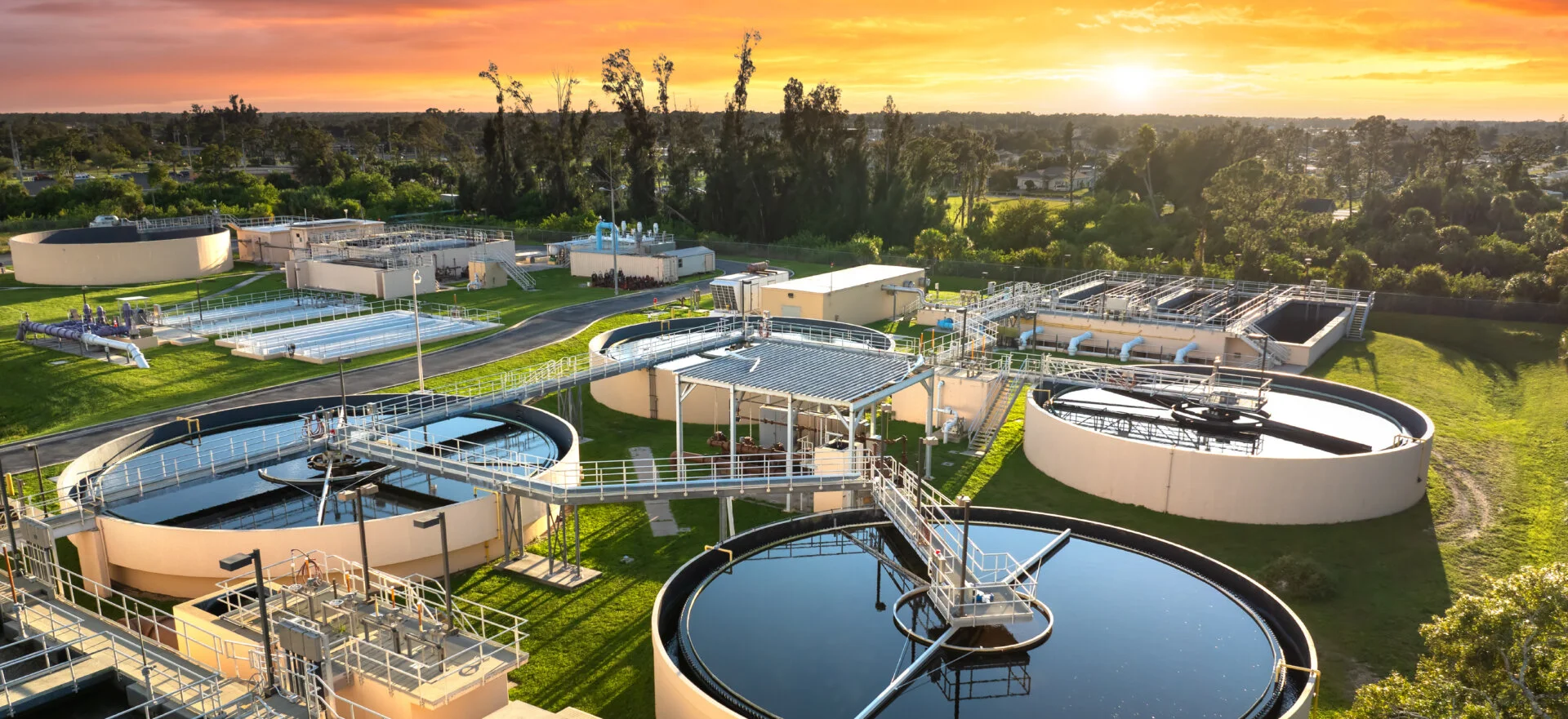
Industrial and municipal wastewater treatment requires the integration of physical, chemical and biological processes to remove solids, organic matter and other contaminants.
Primary and secondary treatment are among the most important stages. Their proper combination reduces the pollutant load, improves process stability and increases the plant’s overall efficiency.

Primary Treatment
The main objective of primary treatment is to remove suspended solids, oils and fats, settleable solids, and part of the organic matter associated with the particulate fraction.
Processes such as coagulation, flocculation, flotation and sedimentation promote the separation of contaminants before the biological stage.
The main types of equipment used include:
» DAF systems – Dissolved Air Flotation: remove solids, oils and fats using microbubbles that cause particles to rise to the surface.
» Clarifiers: separate settleable solids by gravity, allowing them to be extracted through bottom blowdown lines.
» Oval-disc thickeners: increase sludge concentration and reduce its volume before storage or dewatering.
» Automatic flocculant preparation units and dosing skids: allow reagents to be prepared and dosed in a controlled manner, improving process stability and efficiency.

Secondary Treatment
Secondary treatment mainly comprises the biological stage, in which microorganisms break down the biodegradable organic matter present in the wastewater.
Its efficiency depends on maintaining suitable oxygen, mixing, organic loading and biomass concentration conditions.
The main types of equipment used to aerate and mix the mixed liquor include:
» Fine-bubble diffusers: provide high oxygen-transfer efficiency and contribute to reactor mixing.
» Coarse-bubble diffusers: primarily promote mixing and offer greater resistance to fouling in certain applications.
» Surface aerators: combine oxygen transfer and agitation, helping to keep the biomass in suspension and homogenize the mixed liquor.
Proper integration of primary and secondary treatment reduces the load applied to the biological process, improves effluent quality and helps control operating costs.
Selecting reliable equipment adapted to the characteristics of each wastewater stream is essential to ensure stable and efficient processes capable of meeting current environmental requirements.